
ANSWER: Yes. You should say it even if the Imam doesn’t say it.
Read more
ANSWER: A woman can work but under the condition that the place should be segregated, the job must be halal, she must observe the proper Islamic hijab and most importantly her Wali must give her permission for this.
Read more
ANSWER: The sacrifice can’t be made before the eid prayer. The best would be to sacrifice on the day of Eid, however you can also sacrifice on the 11th, 12th and before Maghrib of 13th of Dhul hijjah. https://islamqa.info/en/answers/36432/definition-of-udhiyah-and-ruling-thereon
Read more
ANSWER: The days that are forbidden to fast are the 2 eid days and ayyam al tashreekh (11,12 and 13 of dhul hijjah) as these are the days of eating, drinking and remembering Allah. It is also prohibited to isolate Friday and Saturday with voluntary fasting.
Read more
ANSWER: Mahr should be paid in money, gold or land, plot or anything material so that if you were to opt for khulu in the future, you can compensate him by returning to him what he had given.
Read more
ANSWER: This is not from the sunnah and it is an innovation.
Read more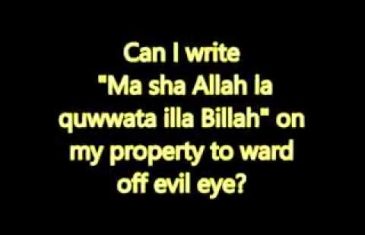
ANSWER: Allah’s name is not for decorative purposes!
Read more
ANSWER: The best sacrifice is a camel, then a cow, if one offers the whole animal, then a sheep, then a goat, then one-seventh of a camel, then one-seventh of a cow.
Read more
ANSWER: You don’t know what goes in their lives. A lot of them are being punished without you noticing it. Those who are not punished in this life, Allah saves their punishment for the hereafter, which is the worst kind of punishment for anyone.
Read more
ANSWER: This is permissible but you should say it silently.
Read more